
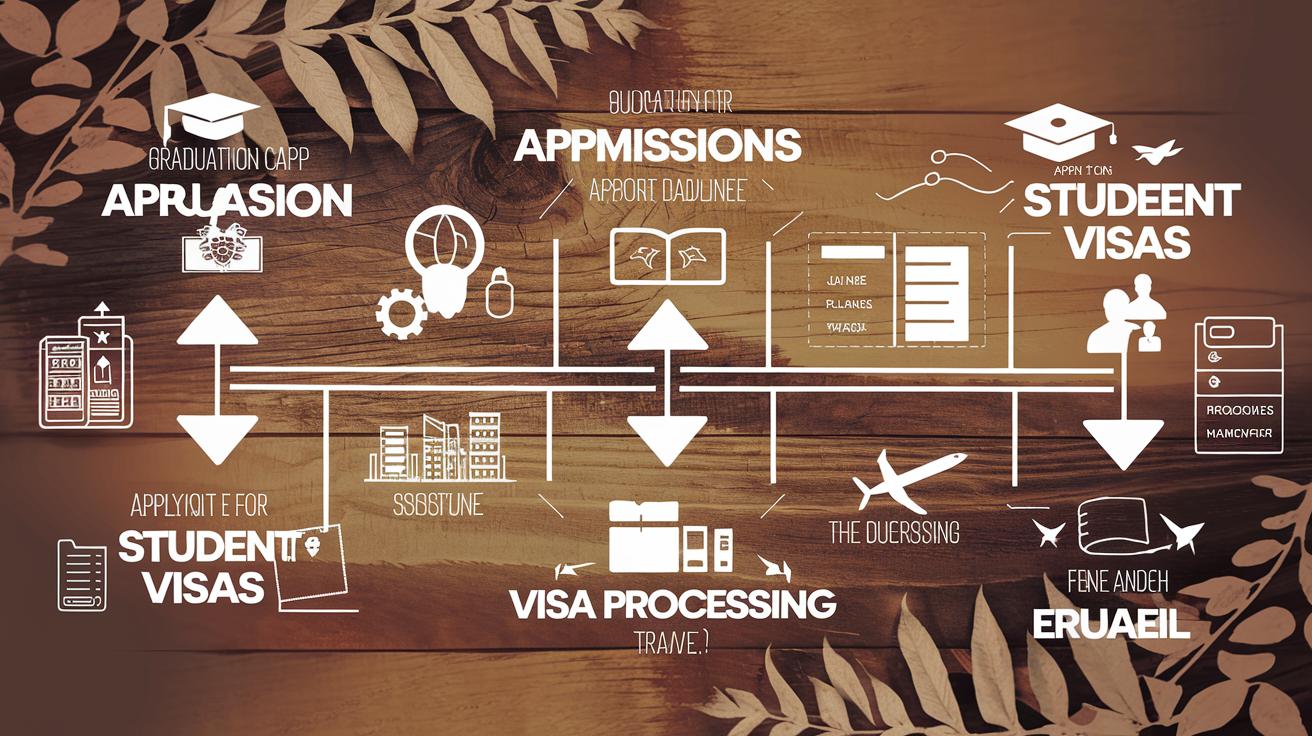
If you’re a Nigerian, African, or international student dreaming about studying abroad, one of the critical questions you’ll face is: How early should you apply for admissions and student visas? This question isn’t just about filling out forms early; it could be the difference between securing life-changing scholarships, grants, or the right admission—and missing out altogether.
Applying early is not a vague suggestion—it’s a practical strategy that significantly improves your chances of success. In this article, I will guide you step-by-step on exactly when and how to prepare, apply, and relocate safely for study.
Understanding the Study-Abroad Pathway Related to Admissions and Visas
When planning to study abroad, your journey breaks down into major stages:
- Researching and choosing your destination and program.
- Preparing and submitting your admission application.
- Applying for scholarships and funding.
- Securing your student visa.
- Making travel and accommodation arrangements.
Each stage requires careful timing. Waiting too late to apply often leads to rushed submissions, missed deadlines, and higher stress. This is especially true for Nigerian and African students who want to maximize financial aid and scholarship opportunities.
Why Do Students Fail to Apply Early?
Most students begin their application journey too late, typically months after admission deadlines. The common reasons include:
- Lack of awareness about deadlines and processes.
- Incomplete or improperly prepared documents.
- Waiting until admissions or scholarship windows open, then rushing.
- confusion about eligibility criteria.
- Waiting for exam results (e.g., WAEC or NECO) without preparing documents in advance.
This causes missed scholarships, longer visa processing times, and limited accommodation options.
What Prosperous Applicants Do Differently
Successful students map out their timelines at least 9–12 months before their intended start date. They:
- Research early to understand country-specific admission and visa timelines.
- Prepare all documents (SOP, CV, transcripts, references) in advance.
- Identify scholarships or grants with early deadlines and apply accordingly.
- Stay proactive in communication with admissions offices and fellow applicants.
- Use official portals and never rely solely on unverified agents.
Immediate Action for You: Start Now!
Set up a personalized calendar starting 12 months before you want to start studying. Note deadlines for:
- Admissions applications.
- Scholarship submissions.
- Visa applications.
- Financial proof requirements.
- Pre-departure visa interviews and medical tests.
Mapping this gives you the clarity and confidence to meet deadlines stress-free.
Choosing WHERE to study and WHY: Countries, Regions, Institutions
Ideal study destinations vary because of language, cost, lifestyle, and scholarship availability. popular countries for Nigerian/African students include:
- United States: High-quality education, diverse scholarship programs, but longer visa processing times.
- United Kingdom: excellent funding such as Commonwealth Scholarships; competitive timelines.
- Canada: Friendly immigration policies, streamlined student visa process.
- Australia: Numerous government and university scholarships, high living cost.
- Germany: Tuition-free public universities, many English-taught courses.
- Netherlands: Wide range of courses and scholarships, good English proficiency.
- france: Government-funded scholarships for developing countries.
- South Africa: Regional hub with affordable education and scholarships for African students.
- Malaysia: Affordable tuition, emerging scholarships.
- Ireland: Growing education sector and scholarships for international students.
Why choose wisely? Different countries have different application and visa timelines. Such as, UK scholarship deadlines may close 9–12 months ahead, while some US universities accept students up to 6 months before semester start.
Who Can Apply? Eligibility Rules and Flexibility Pathways
You don’t have to be a straight-A student or have a perfect CGPA to apply. Most scholarships and admissions accept:
- WAEC and NECO certificates — with required passes, sometimes with additional language tests (e.g., IELTS, TOEFL).
- HND or Bachelor’s Degrees (BSc) — for postgraduate programs.
- Mature students with work experience or unconventional qualifications.
- Low CGPA students may qualify for some scholarships if they have strong leadership or community involvement.
What students miss here: Not all scholarships are advertised openly, and some have flexible eligibility.Engaged students reach out directly to universities, explain their unique circumstances, and ask about flexibility.
Scholarships vs Grants vs Bursaries vs Financial Aid
Understanding what type of aid you need helps you apply at the right time:
- scholarships: Usually merit-based or need-based awards requiring early applications and strong documentation.
- Grants: Smaller funds disbursed throughout the year,frequently enough based on financial need.
- Bursaries: Aid usually offered by universities for students in financial difficulty, may require in-country application.
- Financial Aid: A broader term covering any assistance,including loans or tuition waivers.
Why students fail here: They confuse these terms, miss application deadlines, or apply for inappropriate funds.
Commonwealth Scholarships and Multilateral programs
For Nigerian and African students, Commonwealth Scholarships are valuable but highly competitive. They require early applications—often up to 12 months before course start—and strong academic records and references.
Other multilateral funds include:
- DAAD scholarships (Germany)
- erasmus+ (EU countries)
- Chevening Scholarships (UK)
- Fulbright Program (USA)
- Australia Awards scholarships
Successful applicants research these programs early, review eligibility, and tailor their applications carefully. Many miss out by applying too late or submitting incomplete documents.
Government-Funded and University-Funded Opportunities
National governments and universities frequently enough offer direct scholarships or fee waivers. Examples include:
- University-specific scholarships with application windows close to admission timelines.
- Government-sponsored scholarships require early national-level submission and approval.
Always check official university websites or government portals instead of relying on third-party agents claiming guaranteed placement.
Application Timelines and Readiness Windows: What You Must Know
Most universities have fixed admission application deadlines, commonly:
- Fall intake (August/September): Application deadlines between November and March of the previous year.
- Spring intake (January): Deadline around July to September.
- Summer intake (May/June): Deadline between January and March.
Visas must be applied for as soon as you receive your admission letter, ideally at least 3 months before your course start date.
Academic & Non-Academic Requirements: Preparing Yourself to Stand Out
Admission committees look at:
- Transcripts and certificates: Originals or certified copies, translated if not in English.
- Statement of Purpose (SOP): A clear,personal essay describing your goals.
- Curriculum Vitae (CV): Highlight academic, volunteer, or work experiences.
- References: Letters from mentors, employers, or teachers.
- Language tests: IELTS, TOEFL, or similar.
Document Preparation: The Backbone of Your Application
Many applicants rush document preparation, causing delays or rejections. Successful students:
- Verify documents ahead.
- Order official transcripts and test results early.
- draft and refine SOPs months in advance.
- Request recommendations with adequate notice.
- Prepare a digital and physical copy folder for easy access.
Step-by-Step Application Process: When and How to Apply
- Research programs: Use official university sites and scholarship portals.
- Check eligibility: Match your qualifications carefully.
- Prepare documents: Spend at least 3–6 months prepping.
- Submit applications: Before the deadlines.
- Prepare for visa: Book appointments early; gather proof of funds, admission letters, and accommodation details.
- Attend interviews/tests: If required for visas or scholarships.
how Selection Committees Make decisions: The Inside Scoop
Committee members assess:
- Your qualifications and how well they fit the course.
- Financial need or scholarship criteria.
- Your potential impact and contribution.
- Completeness and clarity of your application.
Incomplete or late applications are frequently enough discarded,regardless of merit.
Fees, Proof of Funds, and Cost Planning Framework
Visa offices and universities require proof you can support your studies, including:
- Tuition fees (can be partially covered by scholarships).
- Living expenses (accommodation,food,transport).
- Health insurance.
- Return flight budget.
Successful applicants provide clear bank statements, scholarship letters, or sponsor letters early.
Study-related Relocation: Visa, Travel, Accommodation, Arrival
Start your student visa application immediately after receiving admission. Visa processing varies widely but generally takes 2–3 months.
Arrange accommodation early—even months before arrival—as popular cities fill fast.
Plan for airport pickup, local transport, and orientation schedules.
Common Rejection Reasons and How to Avoid Them
- Late application submissions.
- Missing or inconsistent documents.
- Weak SOP or references.
- Insufficient proof of funds.
- Using unrecognized agents or fake offers.
Always follow official instructions and verify official portals.
Scams, Fake Agents, and Red Flags
Beware of agents promising guaranteed scholarships or visa approvals for a fee. most official applications are free or require nominal processing fees.
Verify agents or facilitators through official education promotion bodies:
Legitimate Study-Abroad Facilitators: What They Can and Cannot Offer
Facilitators can assist with:
- Document review and application advice.
- Guiding you to official scholarship portals.
- Helping fill forms or booking visa appointments.
They cannot guarantee admission or scholarships.
Country × Course Scholarship Map
Below is a practical map to align your course choices with scholarship opportunities across countries,including links to official sources:
| Country | Course/Field | Suitable For | Eligibility & Timing | Official Links |
|---|---|---|---|---|
| United States | STEM,Business,Humanities | Bachelor’s,Master’s students | Apply 9-12 months ahead; need TOEFL/IELTS; competitive scholarships | Fulbright Program |
| United Kingdom | Social Sciences, Engineering | Graduate & Undergrad | Deadlines often 12 months prior; strong SOP & references | Chevening Scholarships |
| Canada | health Sciences, Technology | Undergrad & Postgrad | Apply 10-12 months ahead; IELTS or CELPIP needed | Canada Scholarships Portal |
| Australia | Arts, IT, Agriculture | All levels | Applications open 12 months prior; require GTE (Genuine Temporary Entrant) statement | Study Australia scholarships |
| Germany | Engineering, Sciences | Postgrad & PhD preferred | Check DAAD deadlines 10-12 months before course start | DAAD Scholarships |
| Netherlands | Environmental Science, Law | Undergrad & Postgrad | Deadlines 8-10 months ahead; solid academic transcripts critical | Study in Holland Scholarships |
| France | Business, Art, Engineering | Postgrad | Scholarships require early French language preparation | Campus France |
| South Africa | African studies, Law | African regional students | Applications open 6-9 months prior; bursaries for regional candidates | South African Scholarships |
| Malaysia | Medicine, Business | undergrad | Generally later deadlines; affordable tuition | Study in Malaysia Scholarships |
| Ireland | Computer Science, Humanities | All levels | Deadlines 8-10 months ahead; English tests required | Education in Ireland |
Recommended Official Links to Use and Avoid Common Mistakes
- EducationUSA – Official US study and scholarship info. Don’t rely on third-party copycats.
- Chevening scholarships – UK scholarships. Apply early and follow instructions.
- DAAD – Germany. Accurate deadline info essential.
- Study Australia – Australian scholarships portal. Avoid fake agents pushing fake offers.
- Study in Canada Scholarship Portal – Info on Government scholarships.
- Campus France – French government scholarship gateway.
- Study in Holland – Official Dutch scholarships.
- Education in Ireland – Scholarships and how to apply.
- South African Scholarships – Regional scholarships.
- British Council Nigeria – Support for Nigerian students.
- Nigeria Federal Ministry of Education – Official notices and guidelines.
- Scholarships.com – Global scholarships database (verify before applying).
- IN Study Global – Guide to study abroad programs.
- USCIS – Student Visa Info – For US student visa rules.
- Australia Student Visa 500 – Official visa requirements.
clear Next Steps Based on Your Readiness
- If you are 12+ months out: Begin researching courses,countries,and scholarships. Start document preparation.
- If 6–9 months out: Submit your admission and scholarship applications immediately.
- If 3–6 months out: Prepare your student visa application, book medical exams, and start accommodation search.
- If less than 3 months away: Confirm visa approvals, finalize travel plans, and prepare for relocation.
Embarking on the journey to study abroad is exciting but requires timely action — especially on admissions and student visas. Begin early, leverage official sources, and approach your application with care. This discipline gives you the best chance of receiving scholarships, securing your place, and arriving safely to study your dream course.
You can do this — start today!




Have any thoughts?
Share your reaction or leave a quick response — we’d love to hear what you think!
-
 0
0 -
 0
0 -
 0
0 -
 0
0 -
 0
0 -
 0
0